Negotiating Equity travels to India…

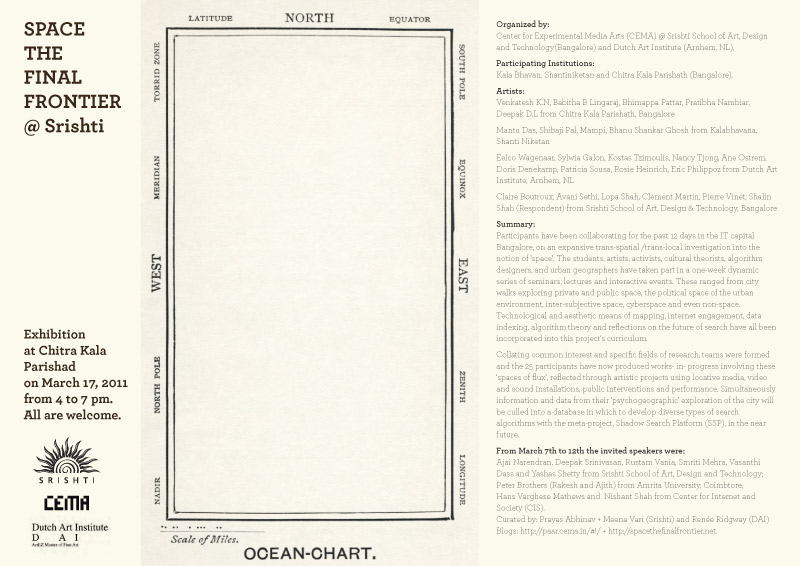
The nine student participants in Negotiating Equity are now embarking on a two-week voyage to India to collaborate with Srishti School of Art and Design and CEMA (The Centre for Experimental Media Arts). Our first pit stop will be New Delhi with a half-day seminar with Raqs Media Collective and a visit to Khoj, an artist led, alternative space for experimentation and international exchange.

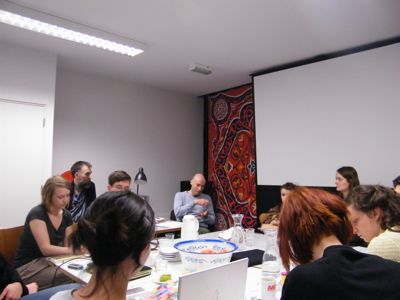
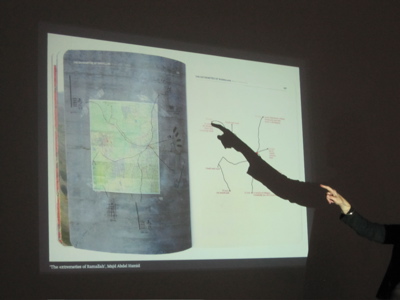
Upon arrival in the IT capital Bangalore, Space The Final Frontier commences, an expansive trans-spatial /trans-local investigation into the notion of ‘space’.

Public space, political space, virtual space, mediated space / the space of media, territorial space, temporal space, inter-subjective space and even perhaps extra-terrestrial space, are departure points. Students, artists, curators, architects, cultural producers, sociologists, algorithm theorists, and urban geographers will embody the practices of collaboration and self-curation, which are central to this participation. Seminars, lectures and interactive events will include technological and aesthetic means of mapping, algorithm theory and reflections on the future of search.

You can follow the developments at the website.

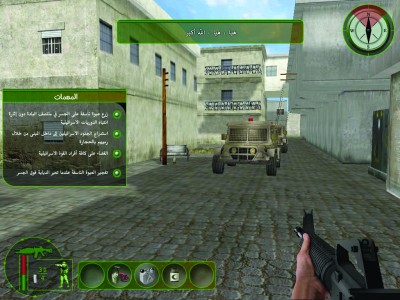
In February, Kristian Lukic was our guest and he kicked off the morning by sharing his past and present practices with NAPON, a collaborative group from Novi Sad. The Institute for Flexible Cultures and Technologies – NAPON, is an organization dealing with emerging forms of technology, active in the field of social and cultural practices, critical analysis of technological growth and (re)interpretation of different notions and conceptions from more recent official and unofficial media and cultural history. The activities of the NAPON organization include organization and production of various events: exhibitions and conferences, educational workshops, presentations, discussions and public forums. Some of the subjects explored by NAPON up to now range from critical analysis of the phenomenon of computer games and the social implications of game culture (the project Play Cultures, 2007-09) Kristian began his lecture by citing some early works from Jodi, and other early new media artists such as Heath Bunting, Vuk Cosic, Alexei Shulgin and Rachel Baker.

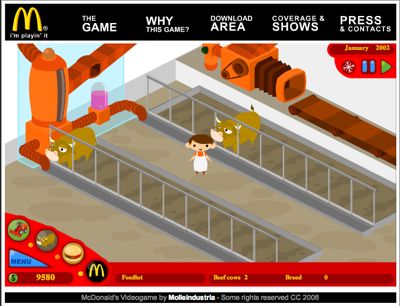
He also discussing gaming, by explaining the two streams: the players or ludologists (etymology and usage taken from Homo Ludens, by Johannes Huizinga) where the most important thing in gaming is the story. On the other hand, narratologists, being aware of the narrator coming into the picture and the role of the narrator. Examples were Molleindustria and their Mcvideogame (2006) and Leakyworld: A Playable theory (2010), one of their most recent project made in 10 days as a contribution to the Wikileaks stories project.

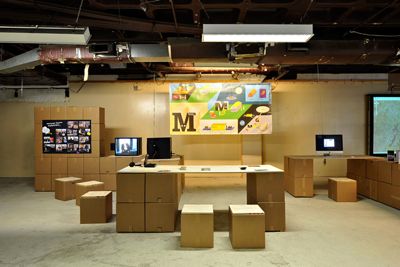
NAPON also organized the exhibition and conference Territories and Resources (2008) that pertained to fields of new economies in the context of virtual territories and resources Web 2.0, where resources here are meant to be the ‘users’. Inspiration was to show where capitalism is performing, on the web. People who are online, working, the time people spend, number of people, is proportional to the value of stock value results in the financialisation of our libido, fulfilling our needs for these things, working for free. But what is the reward? We get attention, we are commenting with people but what else is exchanged? The task of capitalism is to go beyond its borders, go somewhere, expand its growth, territory.

Net art, underground movement along with the critical practice of the hacking culture were exhibited within the gallery space yet some works were exhibited in the public main square, (Trg Slobode) at CONTAINER 001: Alessandro Ludovico (Italy), Paolo Cirio (Italy) with GWEI – Google Will Eat Itself which uses Google ads, and with small hacking, redirect to websites. With that money earned they purchased Google stocks. Amazon Noir, where Alessandro Ludovico, Paolo Cirio and Ubermorgen teamed up, stole copyrighted books from Amazon by using sophisticated robot-perversion technology. Bureau D’Études, is mapping world power, their works a visualization of power and dispositifs. But truth will not set you free. You can read more in the Laboratory Planet. Aristarkh Chernyshev and Alexei Shulgin decided to make art objects because wIth media art you don’t make money. So they invented a project, Electro Boutique, 
or how to create money with ‘Media Art 2.0′. In 1997 Vuk Cosic, hacked the Documenta X website, copied everything and put in on his own website, leading to a whole discourse about stealing the work and website and that the artist is the best place for the speculation of capital.

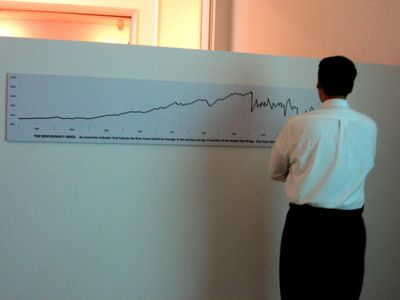
NAPON’S most recent curatorial project is Wealth of Nations (2010) on Spike Island, Bristol, UK. Taking the title from Adam Smith’s eponymous 1776 thesis in which he proposed that the ‘invisible hand’ of ‘self interest’ would spur economic progress. The show also explores what is money, as a religion: highest concept today, as a belief system. Some works included Kate Rich’s Feral Trade project, Natalie Jermijenko and the Bureau of Inverse technologies with Despondency Index. Ola Pehrson’s project NASDAQ vocal index shows the graphs of companies listed on the NASDAQ transformed into music. Computer software converts the graphs to sheets of music, and the scores are presented online on a projection screen, to be read and sung by a member of a local choir.

In the afternoon Kristian lectured on Superstructural Dependencies. This seminar was based on research conducted for the Impakt festival 2010 in Utrecht entitled Matrix City, curated by Stealth (Ana Džokić & Marc Neelen) and Kristian Lukić. Through the technological superstructure of cities, the fast development of mobile devices and the automation of services, the urban environment is undergoing rapid changes. With Superstructural Dependencies, a discussion is opened on the effect of a state of complete dependency on such an artificial technical (urban) superstructure – not only regarding for instance resources like food, water or energy, but as well other key activities like communication.

MATRIX CITY dealt with issues of controlling the city, how infrastructure systems and internet affect urban daily lives. Inspired partly by Dutch architect Constant New Babylon: 1950-1960 the city of play is a world city, in this sense no hard work, machines are working underground for the people. Some examples of works shown on ecology, environment, speed urbanization, car usage, carbon dioxide emissions and transport. Critcal Art Ensemble addresses gene modification. How did the island of Manhattan look 400 years ago?: Mannahatta Project is now entitled the Welikia Project. Data was gathered and used non-human inhabitants in global cities (beavers, birds, deer). Masdar City, will be the first zero-emissions city in the world is under construction. Masdar headquarters will be the world’s first 0 zero carbon building.

Or what about an underground bunker in the US that becomes used for shelter of the future? Utopian worlds like The Wolf and Nanny by Cliff Evans US, 2009, 6 minutes, are contrasted by works of Zelimir Zilnik, part of Black Wave movement with his portrait on taking in the homeless in 1971 Black Film. For the more arcadian in nature Endless Forest (2006) is where you can meet the one you love using yourself as a deer, scripted with gestures. Kristian ended with a few of his own ‘games’ designed together with Vladan Joler, Eastwood- Real Time strategy group.

This past DAI week were fortunate to have Ni Haifeng as our guest. Haifeng addressed the issue of collaboration between the artist and ‘participants’ with many of his past projects. Encircling discussions of ‘para-production’ and labour issues about the very nature of ‘Made in China’, Haifeng incorporates his identity, his mobility and technologies of production while addressing fordist as well as post-fordist consumerism to envisage alternative value systems.

‘Ni Haifeng’s practice stems from an interest in cultural systems of return, exchange, language and production. Through mediums of photography, video and installations, Ni explores the simultaneous creation and obliteration of meaning while drawing attention to the cyclical movements of people, products and goods that are often reflective of patterns of colonialism and globalization. Aims to subvert the status quo and counteract preconceived notions of art are, in Ni’s words, an effort towards reaching a ‘zero degree of meaning’. The concept of uselessness, seen in the desire to offset ‘the production of the useful’ that is central to the operative conditions of consumerism and the ‘dominant economic order’, plays a key role within Ni’s practice, lending his works a distinct political and social dimension.’
Pauline J. Yao

On Friday the 14th Haifeng gave a lecture/seminar entitled ‘Para-Production’, in his own words he describes the title and what he means: ‘I am particularly interested in manufacturing, which is, in a proper Marxist perspective, pivotal in the chain of social production. This specific type of production is now disappearing in more advanced countries and economic systems, and its social and economic significance diminishing. As a result, there occurred a global re-configuration of labor division and hence a new set of political economic relationships. China, among other developing countries, thus virtually becomes the collective working-class of global capitalism. These issues brought my attention to the inner mechanism of global production and consumption.’

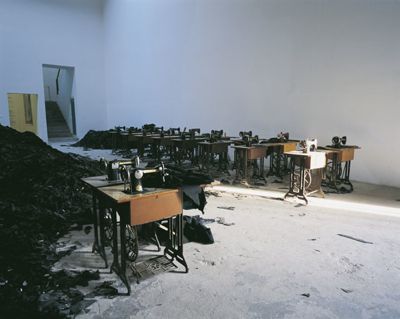
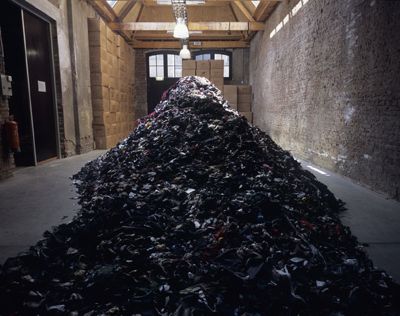
With the addition of visual materials, some can be scene here and on his website, Haifeng further articulated his practice the past few years with projects in Delft and n Leiden. For one of his latest pieces, manufactured in China, he describes the process as follows: ‘This whole project is centered on the notion of labor, which is a knotting point in the ‘para-production’ of social relations. Here, I intend to place labor outside the economic law of equivalence, in other words, outside the gravitational field of capitalist system. The workers here are not commissioned laborers, but active makers, participants and contributors. The old question from Marx – ‘who is the real worker, the piano maker or the piano player’ still rings aloud; I want the laborers and the artist in this project to be equal makers of ‘Para-Products’. Also the work environment is not that of industrial production-line, but that of traditional individual-based type of production. The choice of old manual-sewing machines attests to this. They serve as witness to, at once, a particular process of para-production, and the absence or loss of individual-based ‘making and doing’ in our everyday life. It is interesting to see how weaving, sewing and tailoring, the oldest forms of production of basic human needs, have evolved into an exorbitant culture of high-consumerism. In this light, the project envisages an alternative value system and an alternative mode of social relations. That might sound a bit utopian.’

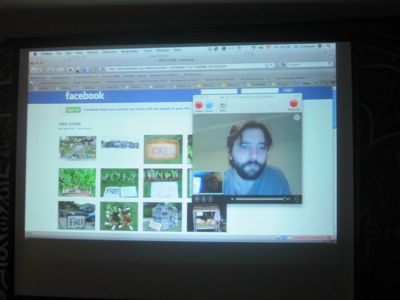
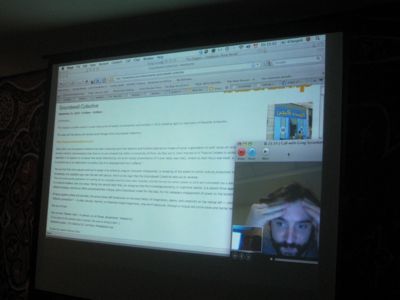
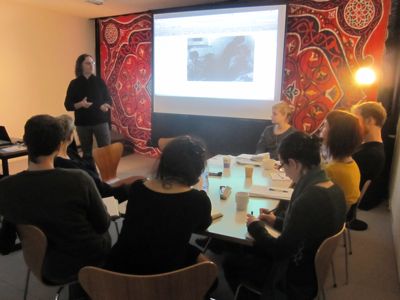
This month, Stephen Wright from n.e.w.s. joined us from Paris. On Thursday night he was the guest at DAI and presented ‘Plausible Artworlds’, a collaborative project organized by Scott Rigby, Basekamp and Stephen Wright. Every Tuesday evening from 6 pm – 8 pm EST, in 2010, a group of people gather in the Basekamp space in downtown Philadelphia, while dozens of others from around the world join the potluck discussion over Skype. A kinda year-chat marathon, representative(s) of artists collectives or art-related groups present not their art “work” but the art-sustaining environment they have devised where art – as they understand that term – can thrive. Piggybacking on the sometimes capricious (but user-friendly and widely used) infrastructure of Skype, ‘Plausible Artworlds’ has sought over course of the year to compile a sizeable cross-section of “exhibits” – in the forensic sense of the term – attesting to the widespread existence of actual, multiple artworlds, substantively different from the mainstream variant, around the globe. The idea is to support alternative modes of artworld / lifeworld integration by bringing together, and hopefully engineering plausible reconfigurations of what is often referred to, unpluralized, as the artworld – its economy, its infrastructure, its inter-cerebral network.

After Stephen’s lecture on Thursday night, Greg Scranton joined us on Friday from Philadelphia in Skype and elaborated upon the project, selecting certain weekly presentations from the comprehensive database. See the ‘Plausible Artworlds’, for more information and during the course of this year, audio archives of the conversations will be added.

On Friday afternoon Stephen organized a seminar entitled ‘Machina multa minax minitatur maxima muris’, addressing the machine in contemporary society in regard to the human body being inseparable from the machine. Modernity defined machines in two different ways, a robot, an extension a prosthesis, a powerful tool, useful and celebrated device. On the other hand as replacing the human body and then perceived as a device of alienation. Those two apparently polarized conceptions of the machine have one fundamental point in common: a machine is not separate from the human body that operates it. Machines are not objects but subjects. Stephen hinged his lecture on modern machines by explaining Fordism, post Fordism and Animism with excerpts from videos like ‘Worker Leaving the Factory’ by Harun Farocki, as well as Angela Melitopoulos & Maurizio Lazaratto’s ‘Assemblages’, from the show Animism curated by Anselm Franke at Extra City and Au Travail(At Work) by Dominic Gagnon. Also cited was the text by Sean Dockray ‘The Scan and the Export’, describing the machines themselves and the people who use them, referencing Deleuze and Guattari ‘desiring machines’.

Machina multa minax minitatur maxima muris

How’s that for a lilting verbal readymade? “Mega machines that menace walls and ramparts to the max.”  Cut & pasted from Roman military strategist Ennius (2nd C. BC), it happens to be one of the first instances of what would become the Latin usage of “machine”. Wouldn’t it make a nice epitaph for what so much politically engaged modernist and contemporary art sees itself to be doing? Breaking down semiotic walls, or better still, melting them away, circumventing them by displacing the partition lines of the sensible? But more importantly, this premodern usage of the notion of machine reveals to just what extent modernity “instrumentalized” the notion of the machine, construing it either as an alienating replacement of the human, or else a mere extension of human agency. What has become clear under post-Fordism and the rise of 2.0 attention economics is the extent to which machines are not mere objects, but subjects — or rather to what extent subjectivities and their production are inseparable from giant machines, from networks of hybrid machinery, from the desiring machines that we are. Animism, anathema to modernity, may be making a comeback. The walls that have been broken down are those of the factories — those icons of modern productivism — yet if the factories are no longer visible, they have not disappeared, but have become socialized — and their immateriality continues to produce value, desire, relationality, profit. The shadows previously cast by the walls have shifted, by which we mean that working conditions have changed dramatically, and yet we struggle to describe this shift with the conceptual vocabulary of modernity. But artists are showing a different picture — and in this era where language stutters to articulate the change, it is interesting to see what artists have been filming behind the invisible factory walls, in the new shadows cast by the pulsing of the overcoded networks.

On Thursday the 11th we received a tour with BAK curator, Cosmin Costinas of the exhibition ‘Vectors of the Possible’ curated by Simon Sheikh. In the exhibition guide he asks, ‘Isn’t is so, that a work of art, and certainly an exhibition, always sets up an horizon, a proposal of what can be imagined and what cannot? At stake is what imagination of the future and past is proposed: how a work of art produces other imaginaries of the world and its institutions, rather than merely reiterating already existing ones, even in so-called critical terms (i.e. affirmative critique). It is a question of horizon.’

On Friday we were back at BAK for a day seminar with Nancy Adajania, independent curator and cultural theorist and Ranjit Hoskote, poet, cultural theorist and independent curator, both based in Mumbai. Presently they are finishing up their 3-month residency as research scholars at BAK/Basis voor actuele kunst, Utrecht. The lecture defined what they meant by ‘nth fields’: places, spaces, context all over the world where interlocutors and collaborators work together. ‘All nth fields have similar structural, spatial and temporal characteristics. In structural terms, these are receptive and internally flexible institutions, rhizomatic and self-sustaining associations, or periodic platforms. In spatial terms, these are either programmatically nomadic in the way they manifest themselves, or extend themselves through often unpredictable transregional initiatives, or are geographically situated in sites to which none (or few) of their participants are affiliated by citizenship or residence. Temporally, the rhythm of these engagements is varied: it traverses a range of untested encounters, from face-to-face meetings and discussions through email and Skype, and can integrate multiple time lines for conception and production.’

Their presentation condensed the ‘post-canonical, post-historical and post-colonial’ into a two-hour lecture which interwove art of the past century in relation to the socio-political global context. Focusing on key figures and introducing specific terminology were the order of the day. This is relation to their present contribution to ‘Dispatch’ that informs their most recent project ‘Notes towards a lexicon of urgencies’.

In the afternoon participants of Negotiating Equity presented examples of the ‘transcultural’ and we watched Nina Fischer & Maroan el Sani’s ‘Spelling Dystopia’ http://www.fischerelsani.net/selected.html along with an excerpt of the Yes Men’s performance on BBC concerning the Bhopal disaster and the consequences of their intervention.

A brief summer update:
Be at the Media has been broadcasting on Salto 1 all the showreels of last year’s participants produced especially for local Amsterdam TV. Please check Salto 1 for the schedule, or Salto on demand to watch broadcasts. You can also watch all of the videos here on the site, just go to Participants 2010 and select. Thanks very much to Be at the Media and especially Kaan Sensoy for all the compilations.

Thursday at DAI consisted of studio visits in the morning and through lunch, continuing in the train as we moved onward to Utrecht for Waiting for the political moment. Renowned English philosopher Simon Critchley’s flight from JFK had to turn back and his speech discussing how the interrelation of force and fiction structure politics today was read instead by a stand-in.

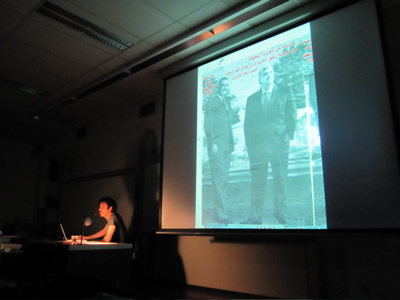
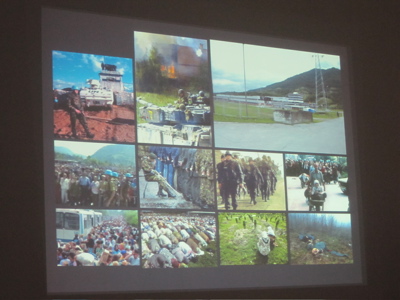
Lebanese artist Rabih Mroué then presented his performance ‘The Inhabitants of Images’ (2009) which engages with the use and misuse of images for political and ideological purposes in Lebanon and the Middle East. The images in the piece set off a flow of speculation touching upon the fabrication of political mythologies and manipulations. This was one of the artist’s lecture-performaces, comprised of three parts focusing on an ‘impossible’ poster. Afterwards we went to BAK and saw Mrouré’s solo exhibition ‘I, the Undersigned’ curated by Cosmin Costinas.

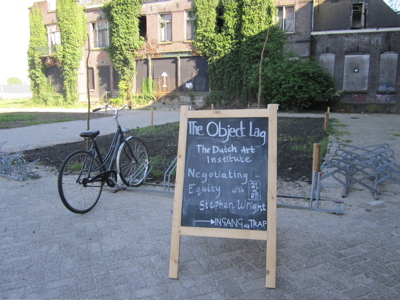
Our last day of this year was in Haarlem at the Nieuwe Vide, where we have been doing a series of presentations for The Object Lag. Presentations by Lauren Alexander and Kostas Tzimoulis on May 23rd and Frederik Gruyaerts and Anna Hoetjes on May 30th dealt with the concept of translation. Eva Olthof and Charlotte Rooijaker use the Teylers museum as part of their research for the Object Lag’s most recent module ‘The Archealogy of Autonomy’. Eelco Wagenaar will make a presentation entitled Sorted (or get sorted) together with David van der Veldt and Tabo Goudswaard for the Day of Architecture. We discussed the individual Salto videos which will be broadcast this summer.

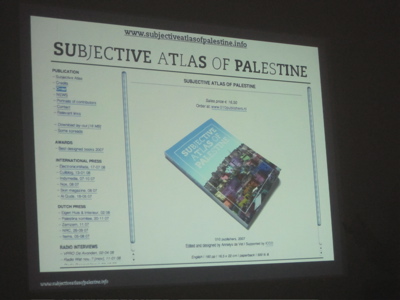
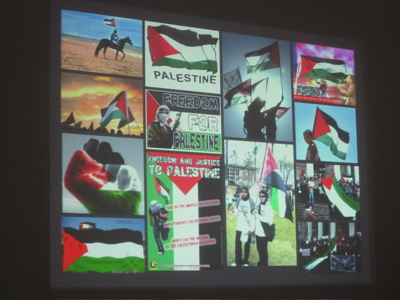
After lunch our guest, Annelys de Vet, graphic designer and course director of Sandberg Institute MA Design programme, gave a lecture entitled ‘The long tale of democracy, or shorter visual strategies’ and showed us four projects from her Subjective Atlas series. “In the media society we currently live in, populism determines the tone, and increasingly the content, of public and political debates. It’s a society in which fear influences many opinions and decisions. As citizens in this society, we have to be cautious, and as designers and artists we should be critical and aware of our responsibilities. It is in this context that I’d like to deal with design, and in particular with designing as a public business. Design today doesn’t so much anymore exist as a book, poster or stamp; as a medium – it exists first of all ín the media, it’s a discourse. The meaning lies in its relationship with its environment – in the context. So designing is no longer about shaping information, but about how to deal with information. It is not the medium that is the message, but the mentality that’s transmitted.”

Thursday we did studio visits with Stephen Wright from n.e.w.s. On Friday we were back at Nieuwe Vide our new basecamp and presentations for The Object Lag. As part of the series of Sunday presentations entitled The Outlet Inn on Sunday May 16th Vittoria Soddu and Jeroen Marttin presentated Haarhandel the week before and also screened the film Hair India by Marco Leopardi en Raffaele Brunetti.

In preparation for the upcoming broadcasts for Salto, Stephen gave a day-long video presentation entitled, When Video Performs Art.
In recent years, as the attention economy has triumphed, art has increasingly withdrawn from the world. In its place, one finds documentation of art, suggesting that art is not immediately present, but hidden, its coefficient of artistic visibility far too low for it to be detected and identified as such. There is perhaps no overarching explanation of this quest for the “shadows,” but there is one undeniable consequence: that is, that cutting-edge art no longer takes place in art galleries, museums or other exhibition spaces, but rather in documentation centers and archives. Increasingly it is through documents rather than through artwork that art takes place, is framed and more precisely “performed.” Of course these “documents” look for all the world like artworks — not only because artworks no longer look like anything in particular, but because they typically use media, above all video, historically associated with art making. Yet many of these video documents lay no claim to the iconic status or regime of visibility of artworks; they simply seek to reframe and hence to lend art-specific visibility to practices and phenomena which otherwise would go undetected as art. This day-long seminar unpacked this paradox conceptually, curatorially and discursively, because it is all too easy to confound – as the art-critical establishment glibly does – video documents and video artworks. The focus will be on examples, with screenings of excerpts from videos various artists.

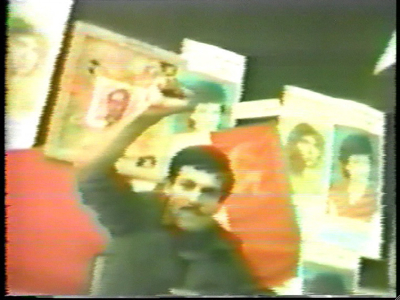
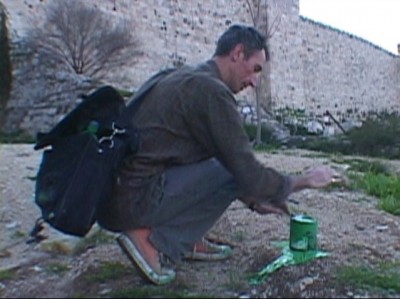
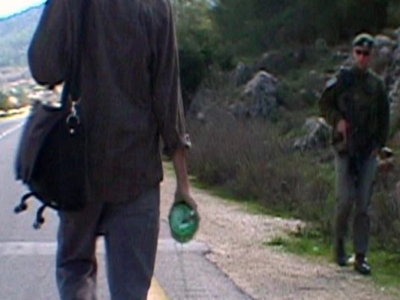
‘The First Murder’ by Vladimir Nikolic uses the Universal Studios showreels most watched real ‘media’ murder of the previous century where King Alexandre I Karađorđević of Serbia was murdered on October 9th 1934 in Marseille. In this split screen video he reconstructs the shooting using all the camera positions and angles, while projecting the original next to it. Fred Lonidier’s text appropriates the Communist Manifesto, taking the word religion and replacing it with the word art. Another example was the video entitled ‘Situation Leading to a Story’ by Matthew Buckingham, in which found footage is reedited into a voice over autobiographical narrative of him trying to find and track down the people who might have been the owners of the actual footage. ‘On Three Posters’ by Rabih Mrouré is a video of him explaining his work: a found videotape, a performance and three protagonists: the artist, a videotape of a martyr – a poiltical resistance fighter- is found and shows his rehearsal of the announcememt of his forthcoming death, commiting the act in front of the camera, and a politician. ‘Sometimes something political’ by Francis Alys, in Stephen’s words is a ‘Pollackesque performance’ of walking the ‘Green Line’. Palestine and Israel were divided up with a thick pencil on a map, therefore when blown up there are no precise boundaries. ‘Spring Story’ by Yang Zhenzong was filmed at the Siemens factory in China, taking the 1500 word speech of Deng Xiaoping’s plea for a new world order, only each word is spoken by different employees. Jakup Ferri, ‘An artist who cannot speak English is no artist’ denounces Anglo imperialism through an attempt to articulate his thoughts in a language he ostensively barely speaks, though what comes across makes no sense. Dan Graham rounded out the day with ‘Rock my Religion’.

This month we were fortunate to have Brett Bloom from Temporary Services (Brett Bloom, Salem Collo-Julin, Marc Fischer) who conducted studio visits on Thursday. About Temporary Services: ‘We are based in Illinois, U.S.A. and have existed, with several changes in membership and structure, since 1998. We produce exhibitions, events, projects, and publications. The distinction between art practice and other creative human endeavors is irrelevant to us. The best way of testing our ideas has been to do them without waiting for permission or invitation. We invent infrastructure or borrow it when necessary. We were not taught this in school. We try different approaches, inspired by others equally frustrated by the systems they inherited, who created their own methods for getting work into the public. Temporary Services seeks to create and participate in ethical relationships that are not competitive and are mutually beneficial. We develop strategies for harnessing the ideas and energies of people who may have never participated in an art project before, or who may feel excluded from the art community. We mobilize the generosity of many people to produce projects on a scale that none of us could achieve in isolation. We strive towards aesthetic experiences built upon trust and unlimited experimentation.’

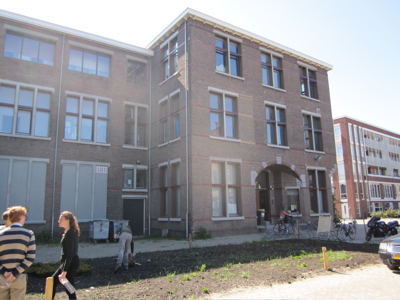
On Friday we kicked off our collaboration within the multidisciplinary project The Object Lag at Nieuwe Vide in Haarlem where DAI participants have been invited to make presentations from May until July in the The Outlet Inn, which opens every Sunday afternoon from 14:00 -17:00. The Outlet Inn offers a window for visitors and participants to interact on a more informal setting, each Sunday the program will be hosted by a different participant of The Object Lag. On Friday morning DAI alumna Emily Williams and curator of Nieuwe Vide for 2010 introduced The Object Lag as an extension of her art practice. The Object Lag is an open self-evolving structure conceived to counter the ever-present tendency to focus primarily on the material presence of the (art) object. The Object Lag instead seeks to place the emphasis on the often invisible and intangible interrelated contexts that orbit around the object. Seeing the object and its experience, as something that is constantly in movement and so open to an infinite amount of possibilities and readings, The Object Lag transforms the common curatorial practice of organizing and arranging into the very material itself, open to the interventions of the artist and visitor alike. Over the year, The Object Lag will take place in five parts (Hubs). Each hub consists of a two-month collaborative working period and are entitled: Form & Content, Translation, The Archaeology of Autonomy, Cross-Reference, and The Intangible.

Friday afternoon we screened Negotiating Equity’s showreel edited by Frederik Gruyaert and recently broadcast at Be at the Media on Salto1, then from 14:00-17:00 was the Art Work public workshop.

Brett showed us selected publications from Half Letter Press and discuss their conception, making and distribution. We first discussed Art Work: A National Conversation About Art, Labor, and Economics, a newspaper exhibition, and website organized by Temporary Services. The paper culls together writings from artists, curators, critics and theorists, from across the United States and Puerto Rico. Contributors were asked to reflect on a range of topics: the country’s (USA) economic situation, how conditions are in their locations, what they are willing to fight to change, and more. Included are historic examples of artists’ projects, initiatives and other efforts to find money for their work or to create broader infrastructural support for others.

DAI participants were asked to bring along images and texts they wish to contribute in making a newspaper modelled on Art Work. At the end of the afternoon we all worked together on making a ‘dummy’ that is directed to the local economic situation for artists.

Please see the website for participants projects and presentations of The Object Lag.

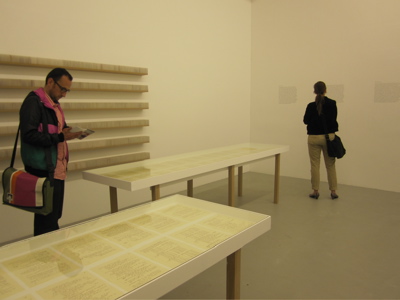
Last month we viewed and discuss the installation, ‘If You Lived Here Still’, an archive project by Martha Rosler. Organized as part of Casco’s year-long programme ‘User’s Manual: The Grand Domestic Revolution’, the years 1989-1991, artist Martha Rosler organized her project ‘If You Lived Here…’ at the Dia Art Foundation in New York City. Yolande van der Heide gave us a tour of the show. ‘If You Lived Here…’ was a seminal group project on housing, homelessness and the systems and conditions underlying them such as gentrification, bureaucratic complicity or non-compliance and increasing privatisation of the public sector. It took a radical approach toward art and institutions of that time, in a mode that might be called cross-disciplinary and “participatory”. Besides the archival materials that expose the organisational and research processes behind the project, more research documents that Rosler has assembled or solicited others to contribute over the last 20 years are installed for close reading at Casco. These also include new materials gathered in Utrecht. We then worked on our ‘showreel’, it’s coming along.

Frans-Willem Korsten then gave us a guided tour on bikes of the phenomenon of Leidsche Rijn. Continuing his discourse on ‘Reading the city’ he presented last December, we will now venture outwards and into the city, thinking about putting tools such as narrativity, theatricality, lyric, spectaclicity and gamistry into practice. ‘Leidsche Rijn, now Utrecht, has been and still is the biggest expansion project in Europe. In just a decade an entire city has been added to the already existing city body. We biked to the newly built city parts and travel around there. The question at the back of our minds will be how to think of city limits. Have they become non-existent? What are the implications of this limitlessness? How can the urban landscape be transformed and what are its spaces for negotiating equity?’ We also had the chance to swing by the most happenin’ spot in all of Leidsche Rijn, the Emmaus second hand store. Most of us were able to find something we liked. See Frans-Willem’s full text here.

Evening lecture and dinner was with our guest Marina Vischmidt who was also invited to ‘User’s Manual: The Grand Domestic Revolution’ by Casco. Her lecture used ‘domestic work as an optic to examine structural and political transformations in the social roles of work and art in the past several decades, starting with the exemplary case of Modernist design and its drive to rationalize the space of the kitchen. The general analysis of how the escape from work, and the extension of work — or the commodity- to all realms of social life, is central both to the development of capitalism and the politics that contest these developments, principally feminism, Marxism and the post-Marxist ‘immaterial labour’ discussion. The key role of the ‘domestic labour’ debates was to concretely analyse how any political revolution needs to start from the basic relations of day-to-day life, and abolish the distinctions between private and public, work and non-work that kept women in the ‘domestic labour ghetto’. Politicised art practices too tried to overcome their separation from work, a separatuon that was grounded in a naturalized, boundless ‘creativity’ that ignored its social conditions of possibility. But ‘work’ is no longer central as a social identity, and those strategies are historical. Or are they?’ Please see Marina’s full text here.