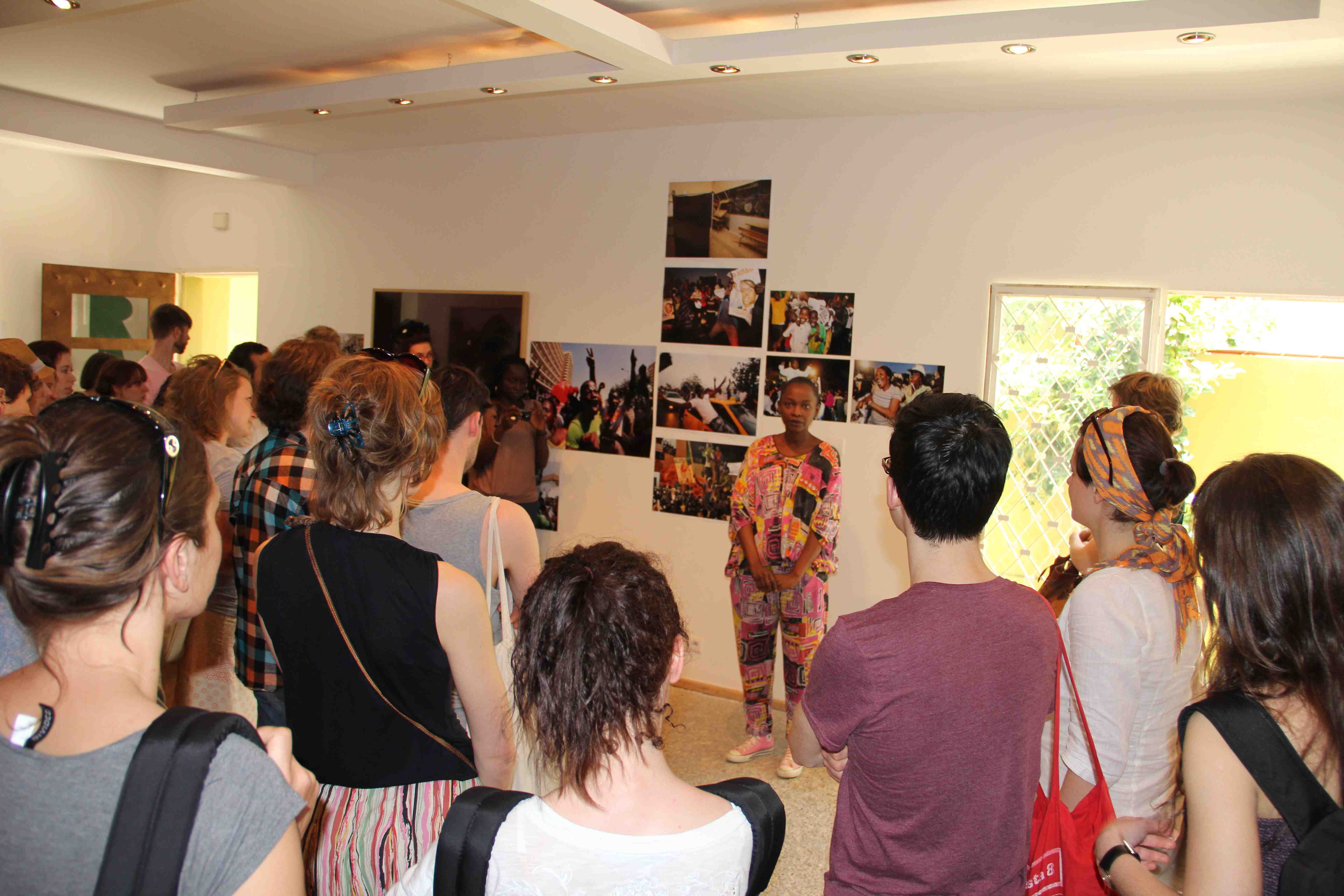
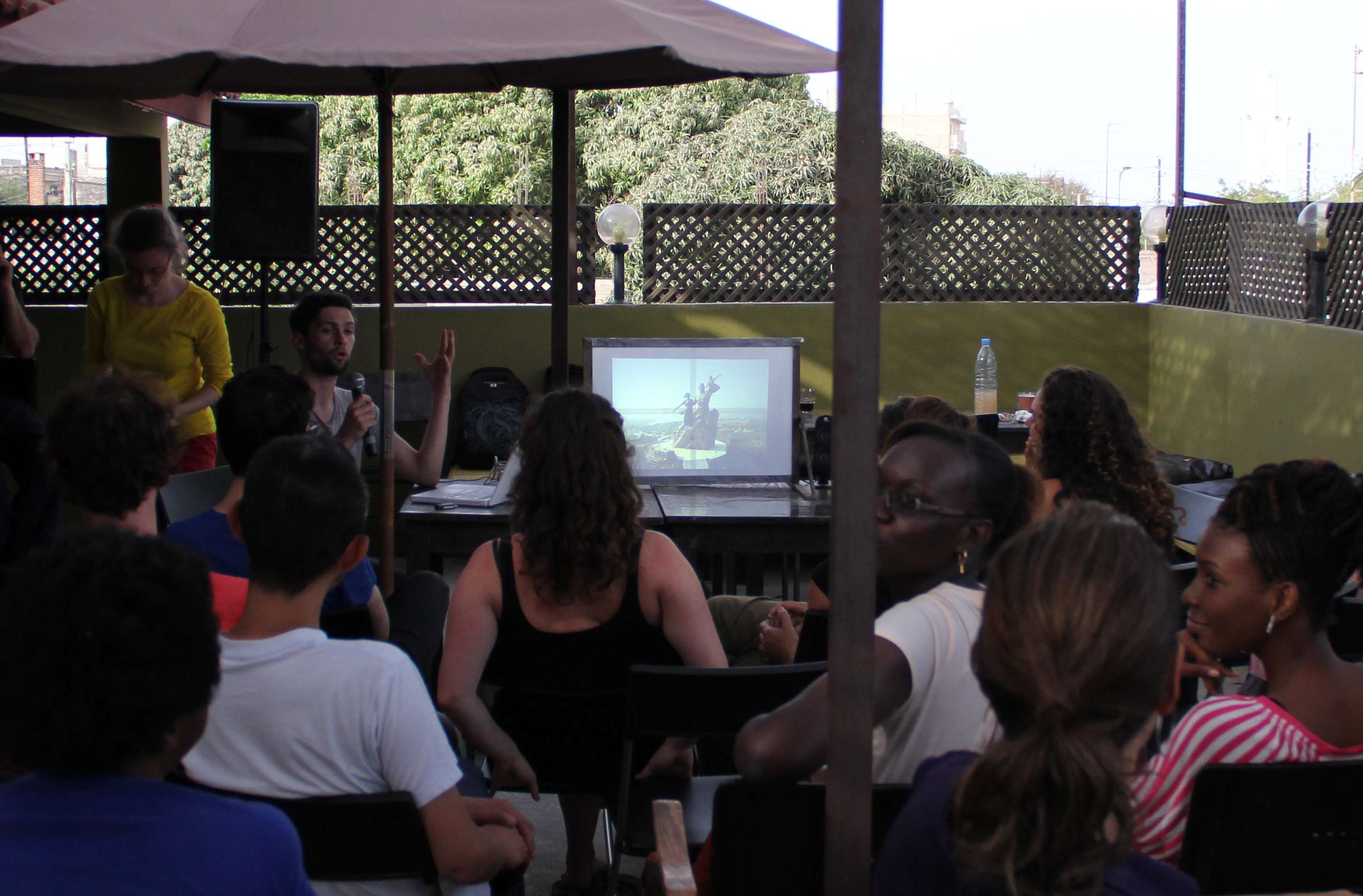
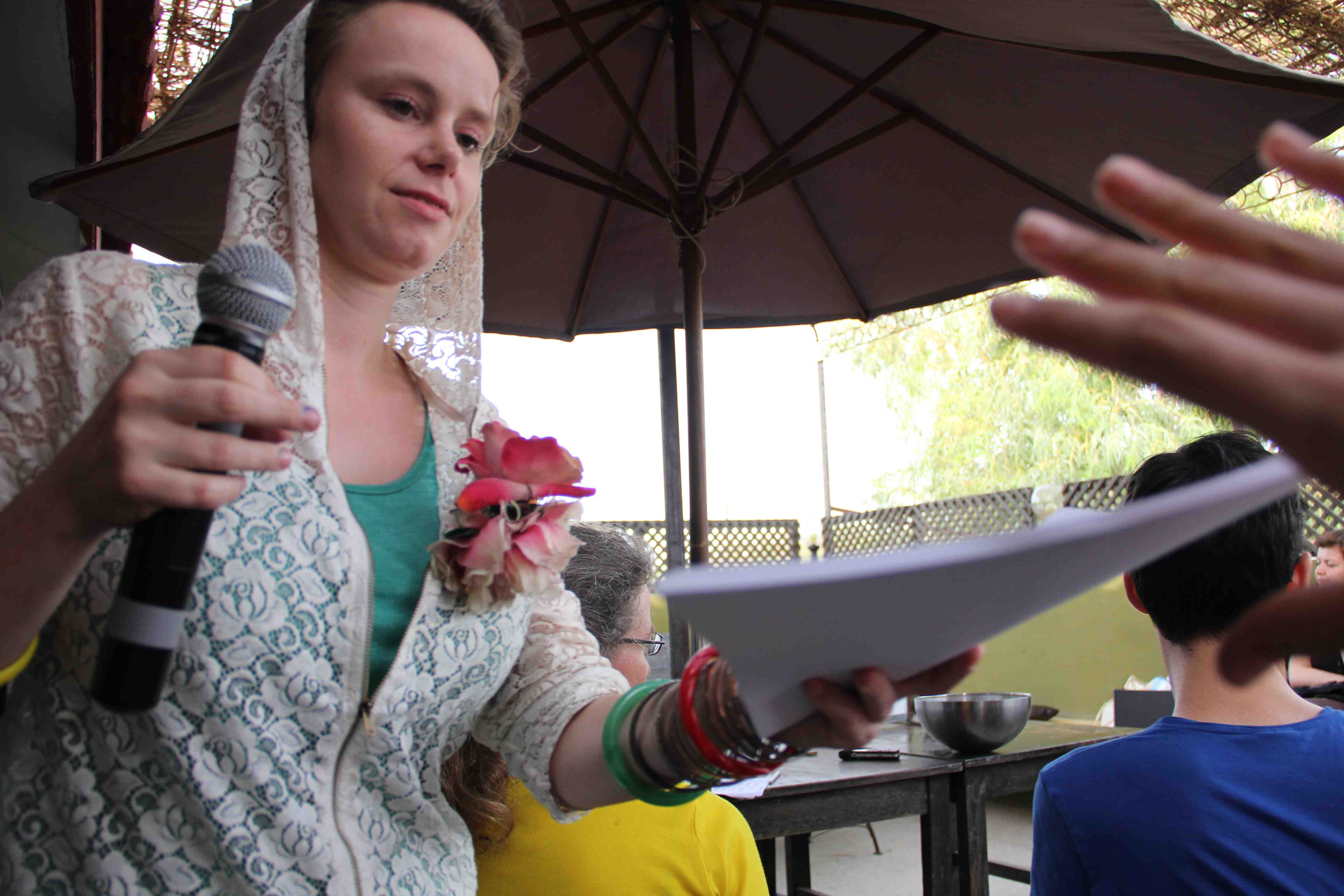
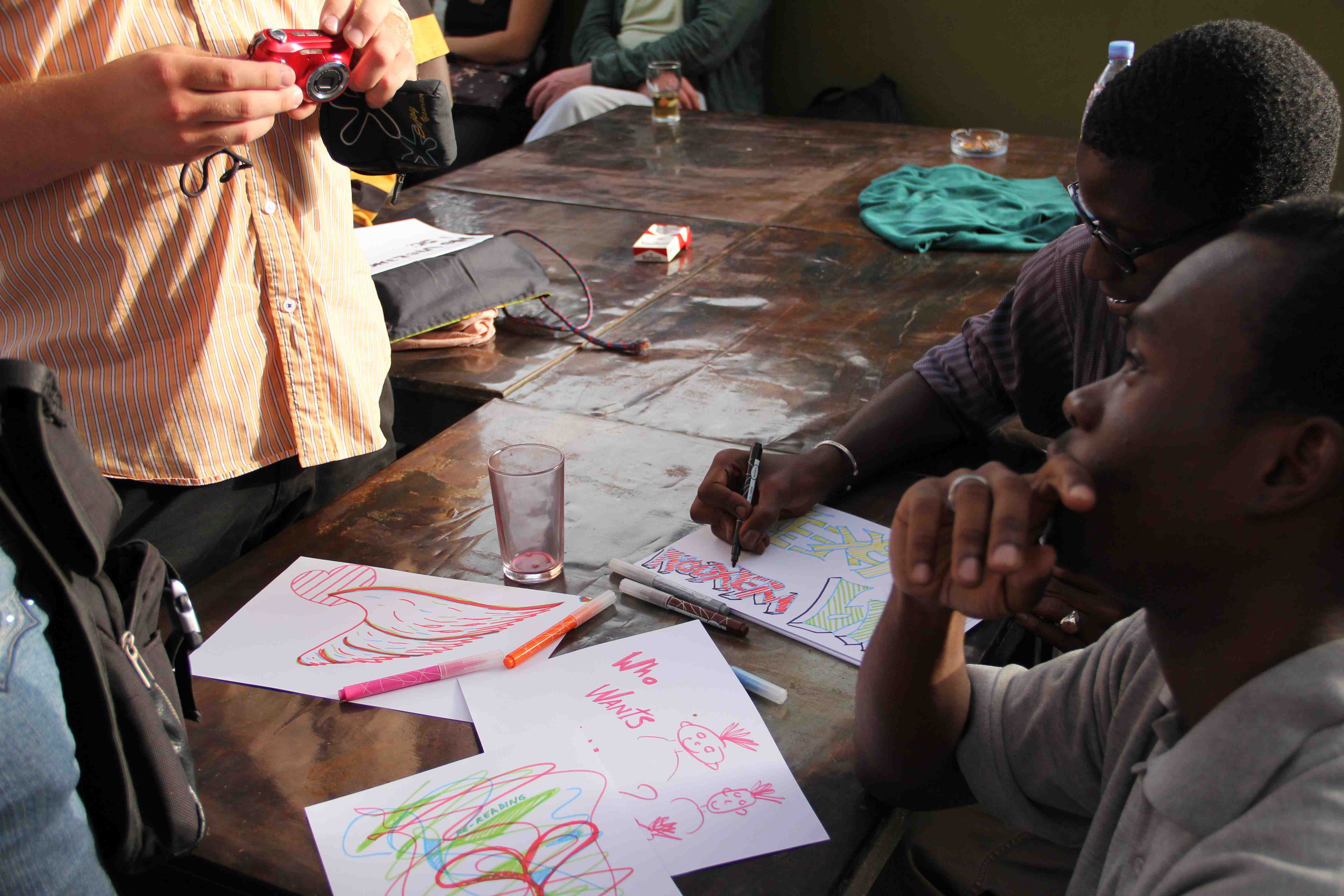
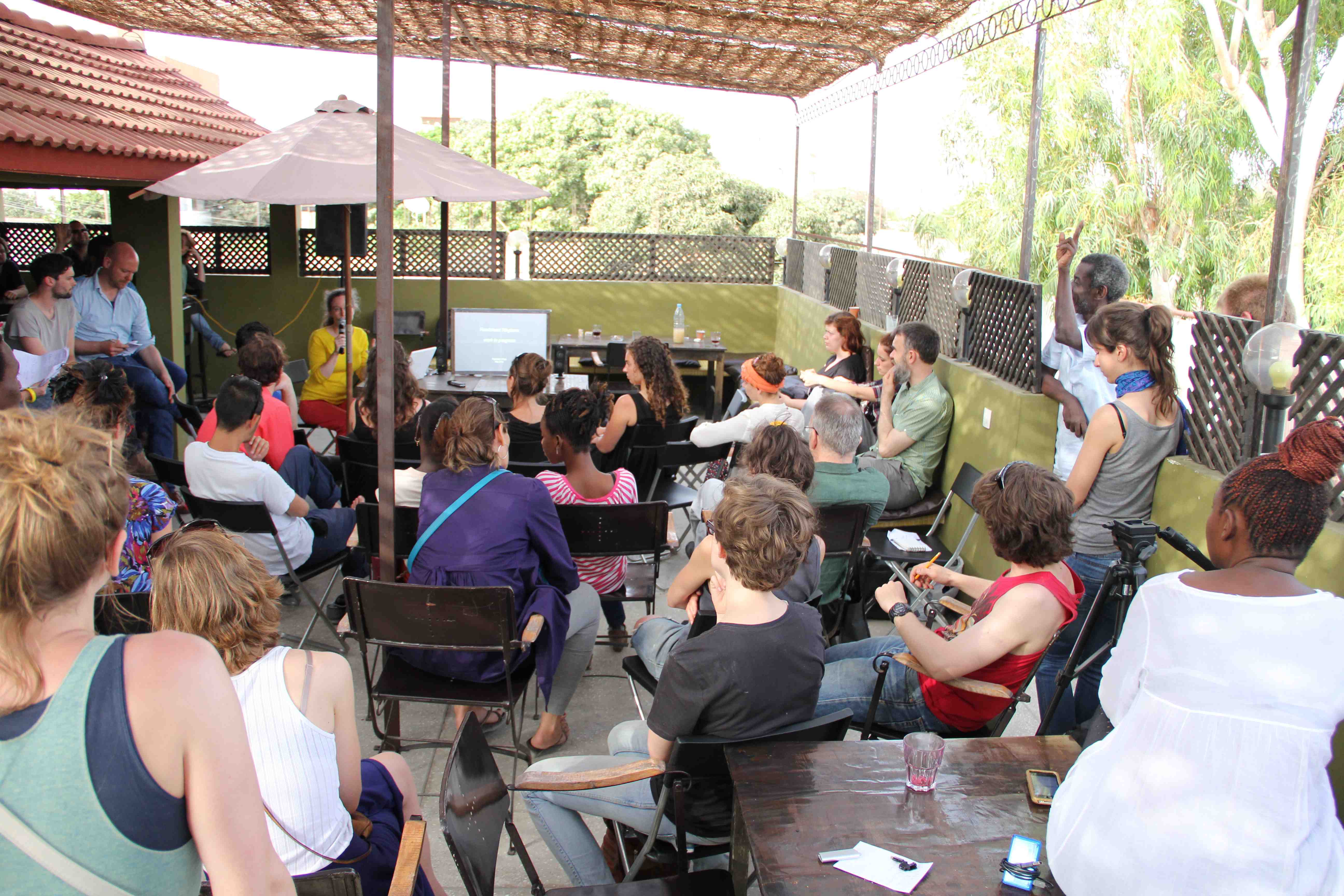
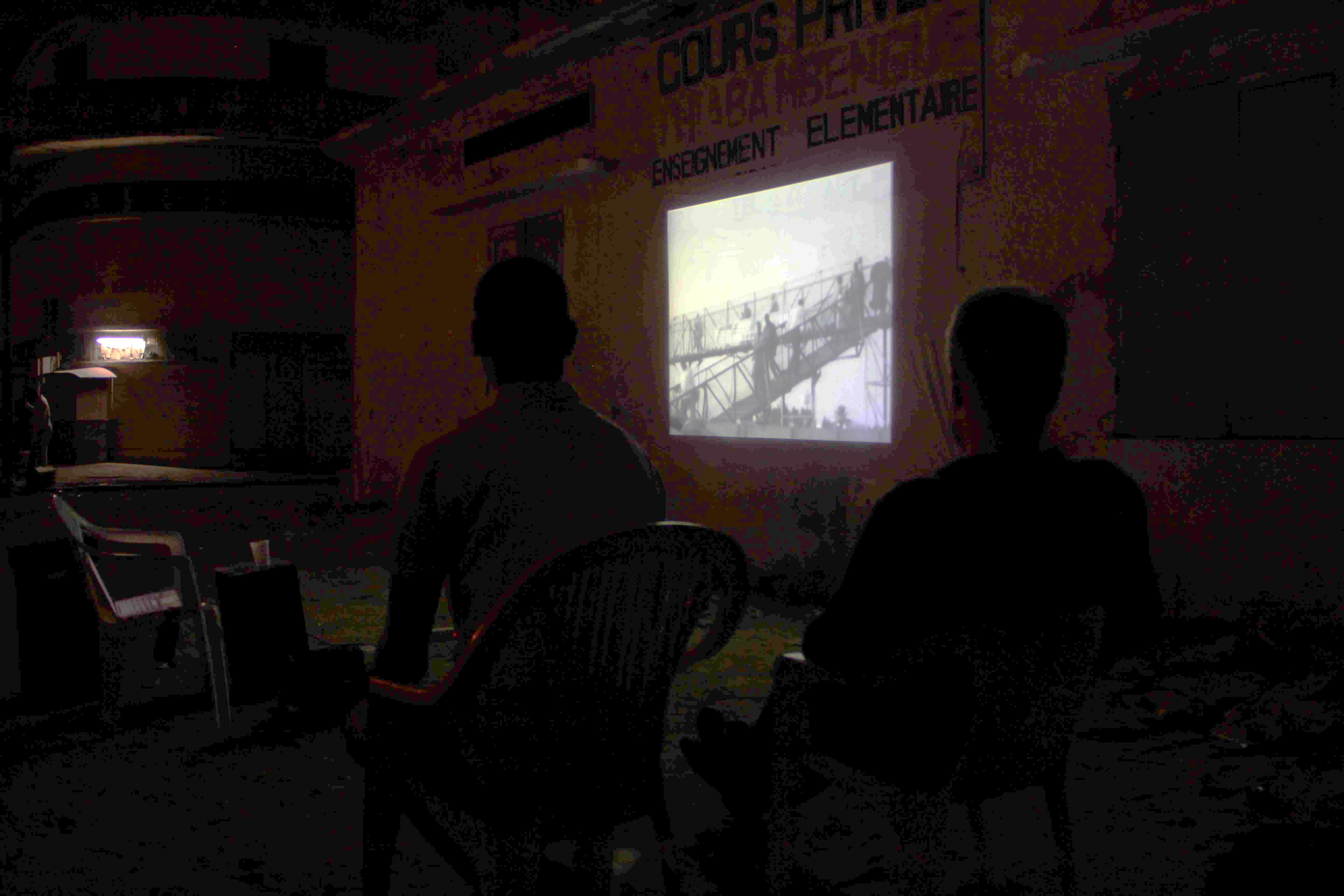
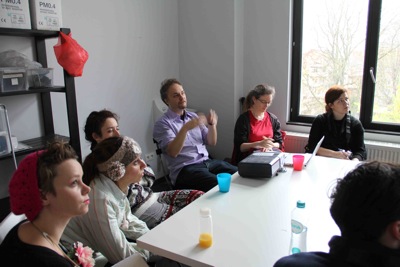
Thursday at DAI consisted of studio visits in the morning and through lunch, continuing in the train as we moved onward to Utrecht for Waiting for the political moment. Renowned English philosopher Simon Critchley’s flight from JFK had to turn back and his speech discussing how the interrelation of force and fiction structure politics today was read instead by a stand-in.

Lebanese artist Rabih Mroué then presented his performance ‘The Inhabitants of Images’ (2009) which engages with the use and misuse of images for political and ideological purposes in Lebanon and the Middle East. The images in the piece set off a flow of speculation touching upon the fabrication of political mythologies and manipulations. This was one of the artist’s lecture-performaces, comprised of three parts focusing on an ‘impossible’ poster. Afterwards we went to BAK and saw Mrouré’s solo exhibition ‘I, the Undersigned’ curated by Cosmin Costinas.

Our last day of this year was in Haarlem at the Nieuwe Vide, where we have been doing a series of presentations for The Object Lag. Presentations by Lauren Alexander and Kostas Tzimoulis on May 23rd and Frederik Gruyaerts and Anna Hoetjes on May 30th dealt with the concept of translation. Eva Olthof and Charlotte Rooijaker use the Teylers museum as part of their research for the Object Lag’s most recent module ‘The Archealogy of Autonomy’. Eelco Wagenaar will make a presentation entitled Sorted (or get sorted) together with David van der Veldt and Tabo Goudswaard for the Day of Architecture. We discussed the individual Salto videos which will be broadcast this summer.

After lunch our guest, Annelys de Vet, graphic designer and course director of Sandberg Institute MA Design programme, gave a lecture entitled ‘The long tale of democracy, or shorter visual strategies’ and showed us four projects from her Subjective Atlas series. “In the media society we currently live in, populism determines the tone, and increasingly the content, of public and political debates. It’s a society in which fear influences many opinions and decisions. As citizens in this society, we have to be cautious, and as designers and artists we should be critical and aware of our responsibilities. It is in this context that I’d like to deal with design, and in particular with designing as a public business. Design today doesn’t so much anymore exist as a book, poster or stamp; as a medium – it exists first of all ín the media, it’s a discourse. The meaning lies in its relationship with its environment – in the context. So designing is no longer about shaping information, but about how to deal with information. It is not the medium that is the message, but the mentality that’s transmitted.”

Thursday we did studio visits with Stephen Wright from n.e.w.s. On Friday we were back at Nieuwe Vide our new basecamp and presentations for The Object Lag. As part of the series of Sunday presentations entitled The Outlet Inn on Sunday May 16th Vittoria Soddu and Jeroen Marttin presentated Haarhandel the week before and also screened the film Hair India by Marco Leopardi en Raffaele Brunetti.

In preparation for the upcoming broadcasts for Salto, Stephen gave a day-long video presentation entitled, When Video Performs Art.
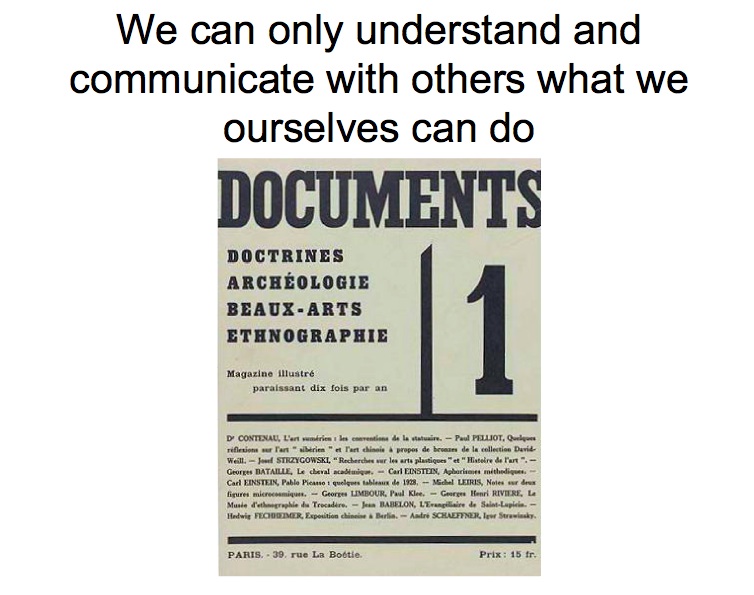
In recent years, as the attention economy has triumphed, art has increasingly withdrawn from the world. In its place, one finds documentation of art, suggesting that art is not immediately present, but hidden, its coefficient of artistic visibility far too low for it to be detected and identified as such. There is perhaps no overarching explanation of this quest for the “shadows,” but there is one undeniable consequence: that is, that cutting-edge art no longer takes place in art galleries, museums or other exhibition spaces, but rather in documentation centers and archives. Increasingly it is through documents rather than through artwork that art takes place, is framed and more precisely “performed.” Of course these “documents” look for all the world like artworks — not only because artworks no longer look like anything in particular, but because they typically use media, above all video, historically associated with art making. Yet many of these video documents lay no claim to the iconic status or regime of visibility of artworks; they simply seek to reframe and hence to lend art-specific visibility to practices and phenomena which otherwise would go undetected as art. This day-long seminar unpacked this paradox conceptually, curatorially and discursively, because it is all too easy to confound – as the art-critical establishment glibly does – video documents and video artworks. The focus will be on examples, with screenings of excerpts from videos various artists.

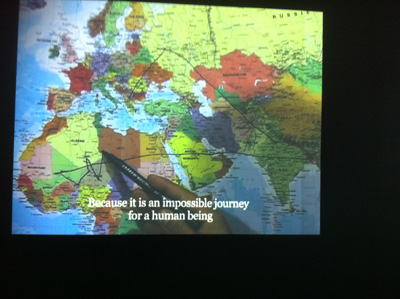
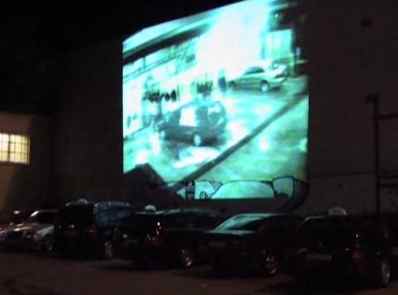
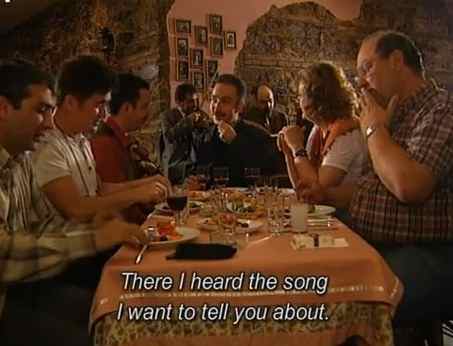
‘The First Murder’ by Vladimir Nikolic uses the Universal Studios showreels most watched real ‘media’ murder of the previous century where King Alexandre I Karađorđević of Serbia was murdered on October 9th 1934 in Marseille. In this split screen video he reconstructs the shooting using all the camera positions and angles, while projecting the original next to it. Fred Lonidier’s text appropriates the Communist Manifesto, taking the word religion and replacing it with the word art. Another example was the video entitled ‘Situation Leading to a Story’ by Matthew Buckingham, in which found footage is reedited into a voice over autobiographical narrative of him trying to find and track down the people who might have been the owners of the actual footage. ‘On Three Posters’ by Rabih Mrouré is a video of him explaining his work: a found videotape, a performance and three protagonists: the artist, a videotape of a martyr – a poiltical resistance fighter- is found and shows his rehearsal of the announcememt of his forthcoming death, commiting the act in front of the camera, and a politician. ‘Sometimes something political’ by Francis Alys, in Stephen’s words is a ‘Pollackesque performance’ of walking the ‘Green Line’. Palestine and Israel were divided up with a thick pencil on a map, therefore when blown up there are no precise boundaries. ‘Spring Story’ by Yang Zhenzong was filmed at the Siemens factory in China, taking the 1500 word speech of Deng Xiaoping’s plea for a new world order, only each word is spoken by different employees. Jakup Ferri, ‘An artist who cannot speak English is no artist’ denounces Anglo imperialism through an attempt to articulate his thoughts in a language he ostensively barely speaks, though what comes across makes no sense. Dan Graham rounded out the day with ‘Rock my Religion’.

This month we were fortunate to have Brett Bloom from Temporary Services (Brett Bloom, Salem Collo-Julin, Marc Fischer) who conducted studio visits on Thursday. About Temporary Services: ‘We are based in Illinois, U.S.A. and have existed, with several changes in membership and structure, since 1998. We produce exhibitions, events, projects, and publications. The distinction between art practice and other creative human endeavors is irrelevant to us. The best way of testing our ideas has been to do them without waiting for permission or invitation. We invent infrastructure or borrow it when necessary. We were not taught this in school. We try different approaches, inspired by others equally frustrated by the systems they inherited, who created their own methods for getting work into the public. Temporary Services seeks to create and participate in ethical relationships that are not competitive and are mutually beneficial. We develop strategies for harnessing the ideas and energies of people who may have never participated in an art project before, or who may feel excluded from the art community. We mobilize the generosity of many people to produce projects on a scale that none of us could achieve in isolation. We strive towards aesthetic experiences built upon trust and unlimited experimentation.’

On Friday we kicked off our collaboration within the multidisciplinary project The Object Lag at Nieuwe Vide in Haarlem where DAI participants have been invited to make presentations from May until July in the The Outlet Inn, which opens every Sunday afternoon from 14:00 -17:00. The Outlet Inn offers a window for visitors and participants to interact on a more informal setting, each Sunday the program will be hosted by a different participant of The Object Lag. On Friday morning DAI alumna Emily Williams and curator of Nieuwe Vide for 2010 introduced The Object Lag as an extension of her art practice. The Object Lag is an open self-evolving structure conceived to counter the ever-present tendency to focus primarily on the material presence of the (art) object. The Object Lag instead seeks to place the emphasis on the often invisible and intangible interrelated contexts that orbit around the object. Seeing the object and its experience, as something that is constantly in movement and so open to an infinite amount of possibilities and readings, The Object Lag transforms the common curatorial practice of organizing and arranging into the very material itself, open to the interventions of the artist and visitor alike. Over the year, The Object Lag will take place in five parts (Hubs). Each hub consists of a two-month collaborative working period and are entitled: Form & Content, Translation, The Archaeology of Autonomy, Cross-Reference, and The Intangible.

Friday afternoon we screened Negotiating Equity’s showreel edited by Frederik Gruyaert and recently broadcast at Be at the Media on Salto1, then from 14:00-17:00 was the Art Work public workshop.

Brett showed us selected publications from Half Letter Press and discuss their conception, making and distribution. We first discussed Art Work: A National Conversation About Art, Labor, and Economics, a newspaper exhibition, and website organized by Temporary Services. The paper culls together writings from artists, curators, critics and theorists, from across the United States and Puerto Rico. Contributors were asked to reflect on a range of topics: the country’s (USA) economic situation, how conditions are in their locations, what they are willing to fight to change, and more. Included are historic examples of artists’ projects, initiatives and other efforts to find money for their work or to create broader infrastructural support for others.

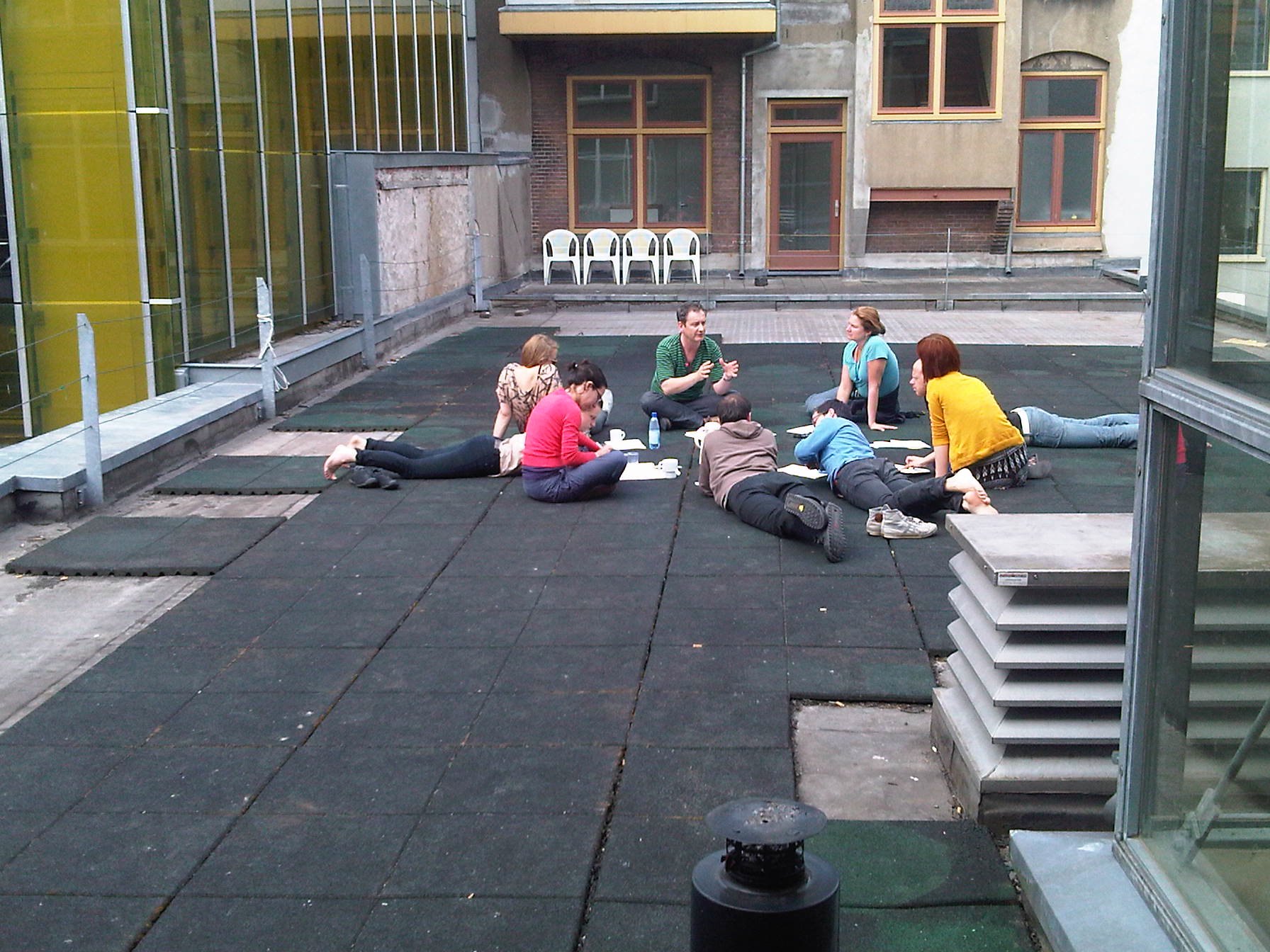
DAI participants were asked to bring along images and texts they wish to contribute in making a newspaper modelled on Art Work. At the end of the afternoon we all worked together on making a ‘dummy’ that is directed to the local economic situation for artists.

Please see the website for participants projects and presentations of The Object Lag.

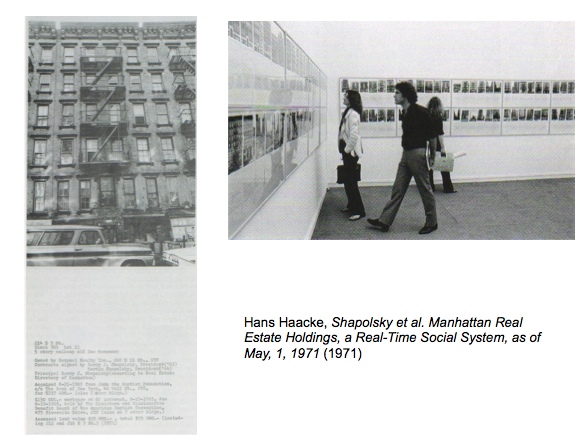
Last month we viewed and discuss the installation, ‘If You Lived Here Still’, an archive project by Martha Rosler. Organized as part of Casco’s year-long programme ‘User’s Manual: The Grand Domestic Revolution’, the years 1989-1991, artist Martha Rosler organized her project ‘If You Lived Here…’ at the Dia Art Foundation in New York City. Yolande van der Heide gave us a tour of the show. ‘If You Lived Here…’ was a seminal group project on housing, homelessness and the systems and conditions underlying them such as gentrification, bureaucratic complicity or non-compliance and increasing privatisation of the public sector. It took a radical approach toward art and institutions of that time, in a mode that might be called cross-disciplinary and “participatory”. Besides the archival materials that expose the organisational and research processes behind the project, more research documents that Rosler has assembled or solicited others to contribute over the last 20 years are installed for close reading at Casco. These also include new materials gathered in Utrecht. We then worked on our ’showreel’, it’s coming along.

Frans-Willem Korsten then gave us a guided tour on bikes of the phenomenon of Leidsche Rijn. Continuing his discourse on ‘Reading the city’ he presented last December, we will now venture outwards and into the city, thinking about putting tools such as narrativity, theatricality, lyric, spectaclicity and gamistry into practice. ‘Leidsche Rijn, now Utrecht, has been and still is the biggest expansion project in Europe. In just a decade an entire city has been added to the already existing city body. We biked to the newly built city parts and travel around there. The question at the back of our minds will be how to think of city limits. Have they become non-existent? What are the implications of this limitlessness? How can the urban landscape be transformed and what are its spaces for negotiating equity?’ We also had the chance to swing by the most happenin’ spot in all of Leidsche Rijn, the Emmaus second hand store. Most of us were able to find something we liked. See Frans-Willem’s full text here.

Evening lecture and dinner was with our guest Marina Vischmidt who was also invited to ‘User’s Manual: The Grand Domestic Revolution’ by Casco. Her lecture used ‘domestic work as an optic to examine structural and political transformations in the social roles of work and art in the past several decades, starting with the exemplary case of Modernist design and its drive to rationalize the space of the kitchen. The general analysis of how the escape from work, and the extension of work — or the commodity- to all realms of social life, is central both to the development of capitalism and the politics that contest these developments, principally feminism, Marxism and the post-Marxist ‘immaterial labour’ discussion. The key role of the ‘domestic labour’ debates was to concretely analyse how any political revolution needs to start from the basic relations of day-to-day life, and abolish the distinctions between private and public, work and non-work that kept women in the ‘domestic labour ghetto’. Politicised art practices too tried to overcome their separation from work, a separatuon that was grounded in a naturalized, boundless ‘creativity’ that ignored its social conditions of possibility. But ‘work’ is no longer central as a social identity, and those strategies are historical. Or are they?’ Please see Marina’s full text here.

Prayas Abhinav from n.e.w.s. joined us all week at DAI. On Monday night he gave a workshop/lecture introducing some concepts that are in vogue: physical computing, rapid prototyping, generative systems etc. He also introduced some tools for organizing and cataloging personal research online, sharing work, open licenses, syndication feeds, etc. and showed examples culled from the internet about how we can come up with ways to question and critique projects and seek out the personal and relevant from them. Individual conversations with DAI participants filled the week about their representation on the Internet. What are the parameters of understanding the tools and the context of being visible in the virtual world? On Thursday evening he showed some of his recent projects and opened them up for discussion.

On Friday we were in Amsterdam at the NIMK (Nederlands Institut voor Mediakunst) where Jaromil showed some of his work and gave us a tour of the exhibition ‘Versions’ and the mediatheek at NIMK. In the spirit of this month’s research we looked at video works in their archive that address issues of movement, or standing still. Selections included: Alicia Framis, ‘Secret Strike Rabobank’, Yael Bartana, ‘Trembling Time’, Sebastian Diaz Morales, ‘Lucharemos hasta anular la ley’ and Guido van der Werve, ‘Nummer acht (Everything is going to be alright)’. Jaromil then gave us a tour of some squats in Amsterdam near the Spui.

After lunch Rick van Amersfoort from Buro Jansen & Janssen delivered his ‘City of Discipline’ lecture. Buro Jansen & Janssen follows the developments within the field of security in NL and Europe and the past 25 years has conducted investigations into police, justice and secret service activities, dealing with all sorts of restrictive, preventive and disappearance measures against those in the margins (fringes) of society. ‘City of Discipline’ uses the antithesis of standing still or moving along as a guide for policy and action. Not only is the government no longer stagnating with its overflow of measures and laws concerning security. Also the citizen no longer remains still – people take action and discipline themselves. Being inactive leads to not only volatility (escapism) but also to not seeing, or better yet, not being seen. Each practice, each society, each action has a downside and we know that civil rights are being violated but we don’t really know because it’s not in the media or it’s just a news flits so we don’t notice. Buro Jansen & Janssen works on the interface of not knowing, but actually does know and shows its work through the ‘City of Discipline’.

This past month we focused on reading and rhetoric as forms of presentation. On Thursday Frans-Willem Korsten introduced some tools with which to read the urban environment. In his lecture ‘Reading the city’, the idea that we can read our environment, which in our case is predominantly an urban environment, is as old as the study of rhetoric. In the last decades the ability to read the environment has been defined generally in terms of coherence or orientation. So far none of the studies concerned considers reading itself to be a political act. Reading is self-evident and has to be facilitated. During the day’s discussion we dealt with reading our environment and considered reading as perhaps the most basic political decision one can take. ‘One has to choose sides first before one starts reading. Or reading should open up the possibility to switch sides.’ In that context we gained clarity about tools such as narrativity, theatricality, lyric, spectaclicity and gamistry and then each participant described a known space, using one of the new tools mentioned above.

Friday we met at De Volkskrant building in Amsterdam and seeing that we will be working on making contributions to this website, I explained how n.e.w.s is organised and the direction of this collaborative online platform. N.e.w.s. contributor Stephen Wright did finally arrive from Paris and after a late start he gave a marathon lecture on the direction of our forthcoming book, along with citing some key art historical paradigms.
‘Art, incidentally, is redundant… but that should not be seen as its doom, but rather as its great fortune. It is redundant in that it has, bit by bit, done away with all material and perceptual externality with respect to other forms of human activity; it has sundered itself from everything – all the generic, geographic and other essentializing moorings that continued to fetter it throughout the twentieth century – except it own histories and self-understanding.’ This user-friendly presentation focused on a cross-section of contemporary, incidentally artistic practices, whose coefficient of artistic visibility is deliberately impaired, situating them with regard to earlier conceptual practices of the 1970s, drawing some conclusions about the prospects of art after spectatorship.’
Afterwards we reviewed participants contributions: videos, audio tracks, images, powerpoints, whatever and briefly discussed our collaborative plan for a one-hour ‘showreel’ for televison broadcast. More on that in the upcoming posts.

On Thursday the 12th n.e.w.s. contributor, Branka Ćurčić was our guest lecturer for the evening programme and during the day, Branka and I did studio visits. Branka is member of new media center_kuda.org, Novi Sad, Serbia and the editor of the recent publication, Reader ID: Ideology of Design, published by AUTONOMEDIA, which she will discuss along with past projects. In what way are design practices perceived and understood today and in what way can one follow their crucial development during the last decades of the 20th century and their connections with artistic practices and critical discourses? The issue is raised about meaning of contemporary design as one of the main proponent of creative industries which, refracted through an ideological prism of neoliberal capitalism preserve the exploiting relationship regarding creativity and the creative personae. Today, there is the question of possibility to practice design outside dominant functionalist principles and the market-dictated production and consumption, i.e., is there a possibility to conduct politization of design practices today? During her evening lecture Branka also gave an overview of autonomous spaces in former Yugoslavia, the ways in which artistic projects were carried out and understood, offering the potential for deregulation and critique. Nowadays times have changed and places and spaces like Kuda and Youth Center CK13 are supported by outside investment along with setting up internal models for sustainability (music concerts, selling books, lectures, etc). It still begs the question whether cooperation with neoliberal art institutions is possible.
Friday we were in Amsterdam visiting a ’secret space’ proposed by Brigitte van der Sande, free-lance curator. Her project 2030: War Zone Amsterdam is an exercise in imagining the unimaginable: civil war in your own city in the year 2030. A cease-fire has just been announced, and a group of international artists, theatre makers, filmmakers, journalists and intellectuals go out into the city to investigate what the war has done to Amsterdam and its inhabitants. 2030: War Zone Amsterdam names no enemies, provides no answers, but fires questions at a possible future. The artists occupy public space, infiltrate exhibitions, festivals and publications, or seek cover in underground spaces. Brigitte introduced DAI participants to a former bunker in the south of Amsterdam and asked them to think about ways to communicate without the usual means- Internet, mobile phones, etc.

In the afternoon we visited Planet Art in De Volkskrant building and Simon Ferdinando presented his current research project: Rotten Cinema (Rotten Cinema – false sun and the new dawn – no time to think, just gotta keep moving….in several contingencies (or wolves) where he showed You Tube excerpts, culled from his archive that rethinks cinema in terms of light and dark. The Sufi teacher Pir Vilayat Inayat Khan taught that ‘Luciferian Light’ is light that has become dislocated from the ‘divine source.’ Using a series of sub headings Simon ruminated on and illustrated some of the possible means of approaching Luciferian roots and routes of cinema. Including George Bataille, George Jackson (Soledad brother) +Deleuze and Guattari on Anti Oedipus.

Rotten Cinema excerpts:  Repo man trailer-Alex Cox 1984, Lumière and Company 1995, The Falls- Peter Greenaway 1980, Schwechater- Peter Kubelka 1958, Adebar -Peter Kubelka 1957, Bedazzeled- Stanley Donen 1967. Recommended to watch: The bed sitting room -Richard Lester 1969. Recommended to read : 1000 plateaus (1914 One or several wolves) Giles Deleuze  and Felix Guattari 1987. Visions of excess writings 1927-1939 George Bataille.

RepomanTheFallsGreenawayKubelkaLester2

Negotiating Equity kicked off at DAI this past week with the introduction of the project to the new participants. We were thrilled to have Ade Darmawan and Reza Afisina of ruangrupa from Jakarta make the first of a series of upcoming Thursday lectures at the DAI, as they are in NL for their project at Casco and Impakt Festival. Though the name has not changed the context has- no longer using condemned flats in Delft this year’s project looks at curation as artistic practice and will be played out through TV broadcasting, web-based online curating, publications, print and interventions in Amsterdam. Notions of self-organisation, aspects of the performative, distributions of responsibility and terms of repossession will comprise our field of operations. Guests from all over the world will come and lecture, virtually or physically, along with contributors from n.e.w.s.: Branka Curcic, Stephen Wright, Prayas Abhinav, Lee Weng Choy and Community Museum Project.

Here is my Keynote introduction: NegotiatingEquity2009-10.ppt

Ade&Reza1Ade&Reza2
RuangrupaCascoRuangrupaCasco2

This past Thursday June 4th we met at the apartments of id11 in Delft, for some the first visit to the space and neighbourhood. Only two of the participants, Veri and Marina, had started working and living in the space. Yet the past two weeks they completed not only their individual projects but began a collaboration. This project Donations Delft, involved acquiring household wares and goods from the neighbours and turned into a whole panoply of social relations. Stephen Wright from n.e.w.s. joined us from Paris as guest docent and the participants presented their works from the past months as well their proposals for Negotiating Equity. In the coming weeks everyone will use the spaces in different ways and their projects are found above under their respective titles or under the participants names to the left in the side bar.
On Friday our group along with Florian Göttke’s Ruffles and Fray project visited Open Source in de Bijmer. Starting at the Bijmer Arena we travelled along the route Straat van Sculpturen or Street of Sculptures. 13 international and local artists were invited to create a temporary or permanent work within an area of 3 kilometers, between Bijmer Arena and Kraaiennest metro stations. The curator Helga Lasschuijt gave a short talk about the background of the project and how it came about, originally an initiative of a few residents. We then visited Thomas Hirschhorn’s Bijmer Spinoza Festival, his latest installation that is called a festival, in order to be, in his own words, transplantable. After months of research Hirschhorn was invited by the local track coach Sammy Monsels to set up his installation right near the running track. Typical Hirschhorn in material choice of ducktape, cardboard and cheap wood, this bricolage of rooms contains videos of the Bijmer plane crash, his older work, ‘Dancing Spinoza’, ‘Believers’, a computer centre with Internet access, a snack bar with Surinams food, a Spinoza carmade of plastic bottles, an oversized book of ethics on top and last but not at all least, a specialized library dedicated to Spinoza. A copymachine faciitates photocopies posted everywhere and there is a newspaper published everyday which can be read on the website or taken home. Hischhorn then talked to us about his project, his methodology and practice. Manifold readings of Spinoza’s Ethics are constant sources of inspiration along with interaction of the local readers, users, of his ‘festival’. We ended the day with a rehearsal for Child’s Play, by Guillaume Desanges, in collaboration with Frédéric Cherboeuf, whereby art historical images of artists in performative action are then performed by local children- brilliantly, coached by Muriel Monsels. A lecture on philosophy and evening theatre of Spinoza are not te be missed as well as delicious food and ginger beer. Suggested reading by the Ambassador of Art History, Vittoria Martini: Monument-Re
Hirshhorn4Hirschhorn6Hirschhorn2Hirschhorn1Hirshhorn3Hirschhorn7

During this month’s artists talks at FLAT_land (Bij wijze van Spreken) organised in collaboration with id11 and STeC, Suzanne van Rest, Marina Tomic and Veridiana Zurita made presentations of their works so far and future installation proposals. Suzanne showed her research that focuses on light, man-made as well as natural, sometimes in competition with each other. Her upcoming project, Overexposure references the light of 17th c. Delft through the images of Johannes Vermeer. Veridiana’s When I was the Environment uses her body to literally crawl through the apartments of Delft while being videoed. Marina’s project All day long also incorporates the ‘living’ aspect of the residency in order to test redundancy, habit, as a way to rethink or daily activities and our relationship with time. Having nothing upon arrival Veri and Marina organised gifts and reciprocal relationships with their neighbours. While living together for two weeks, ‘Donations Delft‘ was based on interaction with the neighbourhood and a means of survival tactics. Three other artists, Liset van Dommelen, Pavel Forman and Matthijs Kiel presented their works in progress and afterwards we were able to take a tour _galerij_loop_02___ of the studios or lived in apartments.

Good news, DAI has received another apartment for the participants until the end of July. Curious to see the projects and how they differ from their original proposals.
suzana-1marina-and-verinia